
November 2025
Early test for CKD; Bad bugs in raw food; Bad bugs, UTIs and FLUTD; indoor cat welfare; drug for feline HCM; Cats are smarter than kids; Next Ask Dr. Jean!
New test will detect early CKD
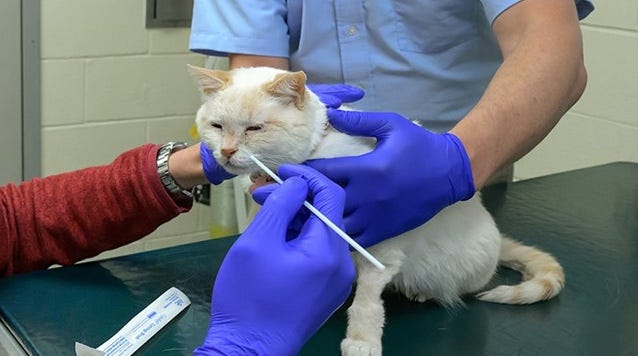
Researchers at Washington State University have developed a genomic test that can identify chronic kidney disease long before symptoms, or even routine labs, hint that anything’s wrong. It only requires a cheek swab, no needles or other bodily invasions. Early detection is important in CKD, so this could be a game-changer once it’s validated and made available. Until then, we keep doing what we’ve always done: watch carefully, do all the things we know that keep cats healthy and happy, and test every six months in older cats, or if any signs appear. Our CKD article is newly updated, check it out!
Bad bugs in raw cat food
For decades, the pet food industry has engaged its allies, including veterinary associations, the government, and academia, to smear and vilify raw pet food. Scaring the public about raw diets is a good way to keep consumers buying their poor-quality, highly processed products and grow their already-vast profits.
Now Cornell has weighed in with a new study with the shrieking headline, “Deadly pathogens found in commercial raw cat foods.” The paper opens with the admission that ancestral raw (“BARF” or bones and raw food) diets have been gaining ground for 30 years. But it then states that “While there is potential evidence for the benefits of raw diets, further studies have underscored the risks of these diets….”
The researchers did extensive normal as well as very unusual tests to find every single pathogen they could possibly squeak out of 112 samples of raw, partly cooked, and processed commercial cat foods. Many of them are not really harmful; the risks are exaggerated.
I just wish researchers would be more honest about the risks and benefits of non-traditional food for our cats. But the money to do such research comes with a built-in bias, so it’s never going to happen.
Cats (and dogs) are designed with an acidic stomach, short digestive tract, and quick processing time specifically to prevent pathogens from gaining a foothold and causing problems. While I am still concerned about the potential for bird flu, I still believe that a raw or lightly cooked whole-food diet is best suited to our cats’ physiology.
Bad bugs in people food may be harming us and our cats
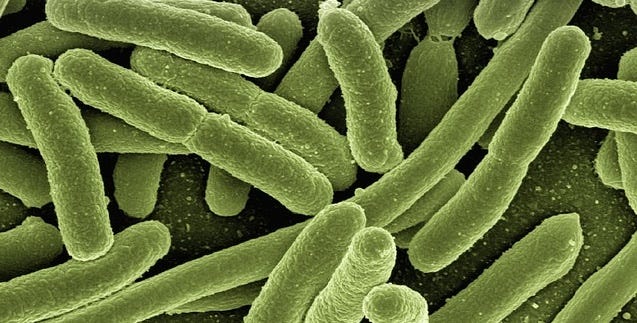
Here’s a good one: human urinary tract infections may be linked to bacteria we eat in contaminated meat. Yes—our meat. We know that commercial meats are chock-full of bacteria, parasites, viruses, and other nasties. All raw meat must be handled properly, and in-contact surfaces and utensils cleaned thoroughly. While healthy cats are more than capable of handling the bacterial load, we humans are not. Cook meat to a safe temperature. Ground meat is the most dangerous because surface bacteria have been thoroughly distributed throughout. Whole cuts need their entire surfaces decontaminated by heat.
The article does not discuss how these infections occur, and their advice is limited to food handling. I’m a veterinarian, not a physician, so I’m not giving medical advice. But in people, UTIs are usually due to fecal contamination of the urinary tract. I’m not saying anyone’s a slob! I’ve had plenty of UTIs myself, as have most women and a lot of men. The warm, moist environment created by tight synthetic fabrics (pantyhose, leggings, snug undies) is certainly a factor. Bacteria from the large intestine are pretty good at moving across the skin and getting where they should not go. Especially with the advent of SGLT2 drugs, which increase the risk of infections in the perineal area, it’s very important to be mindful of hygiene. Personally, I think bidets are the bomb; and you can install them on any toilet cheaply and easily. Protect yourself, please!
Of course, cats are very prone to urinary tract inflammation, though less so to bacterial infections. But older, overweight, and diabetic cats do get infections, sometimes severe ones. Their natural cleanliness usually takes care of it. If your cat needs a little help with personal hygiene, please don’t hesitate to provide it! A warm washcloth or pet wipe a couple of times a day are easy ways to keep your cat well maintained!
New drug for feline heart disease
There’s a new medication on the horizon for hypertrophic cardiomyopathy (HCM), the most common heart disease in cats. Currently, HCM can be slowed but not stopped. Early reports suggest it may actually improve cardiac function rather than just managing symptoms. We’re still waiting on full data, real-world experience, and (of course) pricing, but it’s encouraging to finally see cardiac research in cats getting some momentum.
Indoor Cats
The Feline Veterinary Medical Association has released a new position statement on indoor cats. I totally agree that “indoors” shouldn’t equal “bored out of their minds.” Environmental enrichment, multiple choices for multiple cats, vertical space, and opportunities for natural behaviors remain essential for feline well-being. See our article on Indoor Enrichment, and Jackson’s book Catification, for more ideas. Even small spaces can be made much more cat-friendly!

Pet food industry wants to govern itself
PFI, the Pet Food Institute, is the primary lobbying group for the pet food industry, representing all the major industry manufacturers and suppliers. It is lobbying heavily for “regulatory modernization.” Like all other businesses, the pet food industry would like more flexibility, fewer regulations, and less oversight. They assure us that everything will remain perfectly safe because they’re very responsible and would never, ever cut corners. I’ll be posting an article on PFI’s “PURR Act” on LittleBigCat.com soon.

Cats are smarter than kids
A new study shows that cats outperform human babies at word association. Anyone who has watched a toddler attempt to eat a tube of diaper cream while a cat opens a cabinet door and pulls out the treats is well aware of this! This is a little more interesting because it involves language. But once again, science finally catches up to what we cat people have known all along. Which is kind of fun!
The next Ask Dr. Jean!
Sorry I sprang the first Ask Dr. Jean! with no notice and a short time frame. I wanted to see how it would work. I enjoyed answering the questions, so let’s do it again!
This is a perk for paid subscribers, where you post questions and I answer them. Here’s the first announcement so you can see how it works. (Anyone can read the post!) If you’re not a paid subscriber, you can always consider becoming one, and then you’ll have access to the archives as well as asking questions.
Let’s set the next one for December 1-7, 2025. I’ll be traveling with sketchy internet so answers may not be quick, but I will answer every question! I’ll send out a post when I’m ready to start, and you can ask your questions by leaving a comment on that post. (I won’t see them anywhere else.)
Thank you! Always love these updates.
Thanks, Dr. Jean so much awesome info! Sending purrs from our house to yours.