
July 2026
Declawing now banned in all of Canada; Goat protein; Bird flu still around; Dr. Google vs actual veterinarians
Declawing now banned in all of Canada
At last, all paws will be protected in the Great Nation of Canada! Ontario joins the other nine provinces and three territories on January 1, 2027, when declawing will finally be prohibited.
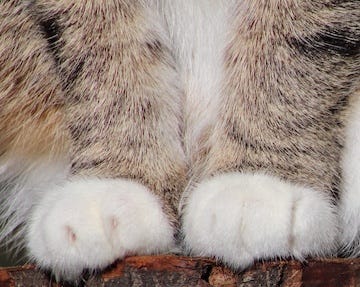
© Nennieinszweidrei @ Pixabay
Canada is unusual because eight of the provinces and the three territories regulated declawing through their veterinary associations, which have all banned the practice. But in Quebec and Ontario, veterinarians are regulated by the provincial government, meaning that a ban had to pass the legislature. (This is the issue we have here in the United States… getting a legislature to do the right thing is no easy matter!) Quebec did so in 2024, and Ontario just put the frosting on the cake.
Goat Protein
Now, I love baby goats as much as the next gal, or guy.
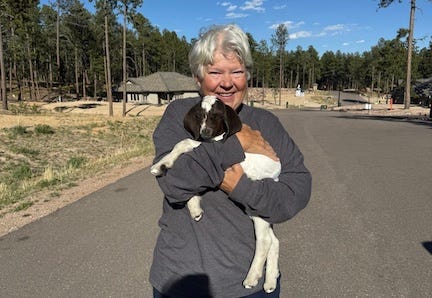
Me with my friend Aspen
But in the rest of the world, goats are frequently a source of food—goats are raised not only for milk and cheese, but for meat as well. So this article in Petfood Industry caught my eye. Goats are ruminants like cows, sheep, and deer, but their meat does not necessarily cross-react if a cat is allergic to beef, lamb or venison. So goat may be a good novel protein for allergy-prone kitties.
However, the one caution is that the term “meat” on a pet food label in the U.S. can include products from cows, sheep, pigs, and goats. Your cat may have been exposed to goat protein without you knowing. After all, once dairy goats are no longer able to produce, they will enter the slaughter chain. But since it’s not a major protein source, it may still be safe for cats who are allergic to more common meats.
Here’s a brand I found that meets my strict nutritional and ingredient criteria (as described in my ebook What Cats Should Eat - updated July 2026):
https://www.zealandiapets.com/
. The brand is available at Chewy.com. As of this moment, Chewy isn’t carrying the goat canned food, but they have a wide variety of other definitely hypo-allergenic flavors like wallaby and brushtail. And yes I know those are cute critters too, but cats are carnivores and we have to honor their needs.
Bird Flu Still a Threat
Yes, I’m still paying attention, and yes, there are still large, sporadic outbreaks. But last month, something new happened: H5N1 bird flu just reached the final continent.
Australia just reported its first cases of bird flu. The virus had already begun its conquest of Antarctica in 2023, killing penguins, seabirds and seals. Oz was the last holdout.
But now bird flu is now truly global.
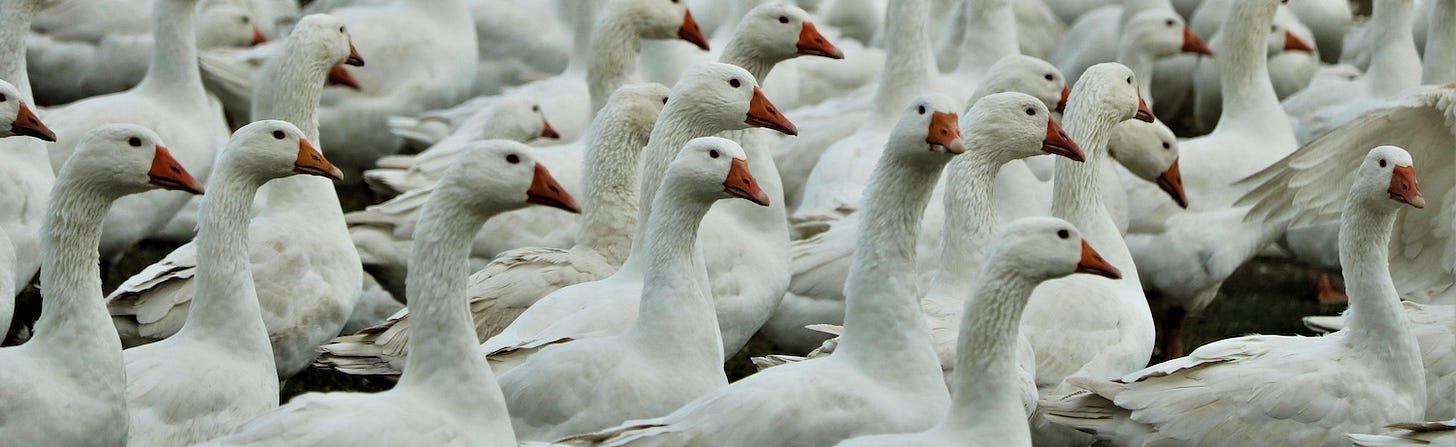
© Caniceus @ Pixabay
It’s worth remembering that the virus is still very active around the world, and can be transmitted from birds and rodents to our cats. If you have a catio, make sure the screen is small enough to keep out even tiny critters. Don’t feed raw milk. And if you choose to feed raw meat, use a commercial raw food treated with HPP (high pressure pasteurization) or follow my precautions.
Dr. Google vs. Actual Veterinarians
One of the most frustrating situations veterinarians confront today is the client who has consulted Dr. Google DVM or an AI chatbot, and now believes they know more than veterinarians with advanced degrees and decades of clinical experience. It’s getting hard to refrain from saying (sometimes several times a day), “Please don’t confuse your Google search with my veterinary degree.”
And it’s certainly true that even an extensive Google search (assuming one knows how to assess the validity and accuracy of references) is not a medical education.
But neither is a medical degree a guarantee of infallible truth. Veterinary medicine has changed its mind about many things over the years. New evidence constantly forces us to reexamine our old ways of doing things. And in fact, that’s the way science is supposed to work.
Good veterinarians don’t stop asking questions when they graduate. They continue reading, questioning, and sometimes changing their minds when better evidence appears.
The same is true for cat guardians. You don’t need to become a veterinarian (although it’s never too late!), but you should feel comfortable asking questions:
What evidence supports this recommendation?
Are there other reasonable approaches?
Has this recommendation changed over time?
What are the risks, benefits, and uncertainties?
Credentials matter. Experience matters. But they don’t replace curiosity or critical thinking ability.
A good veterinarian explains the evidence, discusses the options, and helps you make the best decision for your cat. Some vets just make pronouncements about what your pet needs and do not provide a good rationale, let alone other options that don’t break the bank. For example, advanced imaging and specialty diagnostics are increasingly common. While they can be invaluable in the right circumstances, they aren’t always necessary or urgent.
(Of course, sometimes the reality is that an animal needs emergency treatment right now, and you want your vet—conventional or holistic—to tell you so. I remember three specific cats that I took right from the exam room directly to surgery—and they all recovered beautifully.)
Many conventionally trained veterinarians know next to nothing about holistic therapies. A group of “skeptics”—long-time, highly vocal critics of all things alternative—have done a good job convincing my colleagues that there is no evidence supporting anything other than what’s in the veterinary textbooks or supported by randomized, double-blinded, controlled clinical trials. (Never mind that much of everyday veterinary medicine has none of that backing it!)
Many alternative methods are less invasive, less traumatic, and less expensive, and should be discussed as an option far more than they are. Western medicine excels in emergencies and acute conditions, but is less satisfactory at treating chronic conditions. In contrast, many holistic modalities are better at providing relief and improvement for diseases conventional medicine only manages rather than cures.
So there’s room—and need—for both. You should absolutely research reputable online resources, but you should also respect your veterinarian’s education and experience.
In the end, though, your veterinarian should be someone who says, “Let’s look at the evidence together and come up with the most reasonable plan for you and your cat.”
To that end, my brilliant colleague and dear friend, Dr. Christina Chambreau, has written an article on How to Choose an Integrative Holistic Veterinarian, which I am pleased to present at Little Big Cat. Please read it thoughtfully!
The PURR Act Has Company
Remember the PURR Act? It has company. And those foxes have a taste for chicken! While the original bill remains stalled, several new legislative efforts are advancing many of the same goals. I've taken a deep dive into what's happening—and why it matters to every pet owner. Read the full article on Little Big Cat.
“If you only see the cat on the windowsill, you never notice the tiger asleep behind its eyes.” - Larry, the No. 10 Downing Street Cat

I’m off on a road trip, so you get this newsletter early. If something important comes up—I’ll let you know!