
January 2026
What should cats eat?; Federal anti-declaw resolution introduced; Not all cats are huggers; Fat facts; Ask Dr. Jean
What Should Cats Eat?
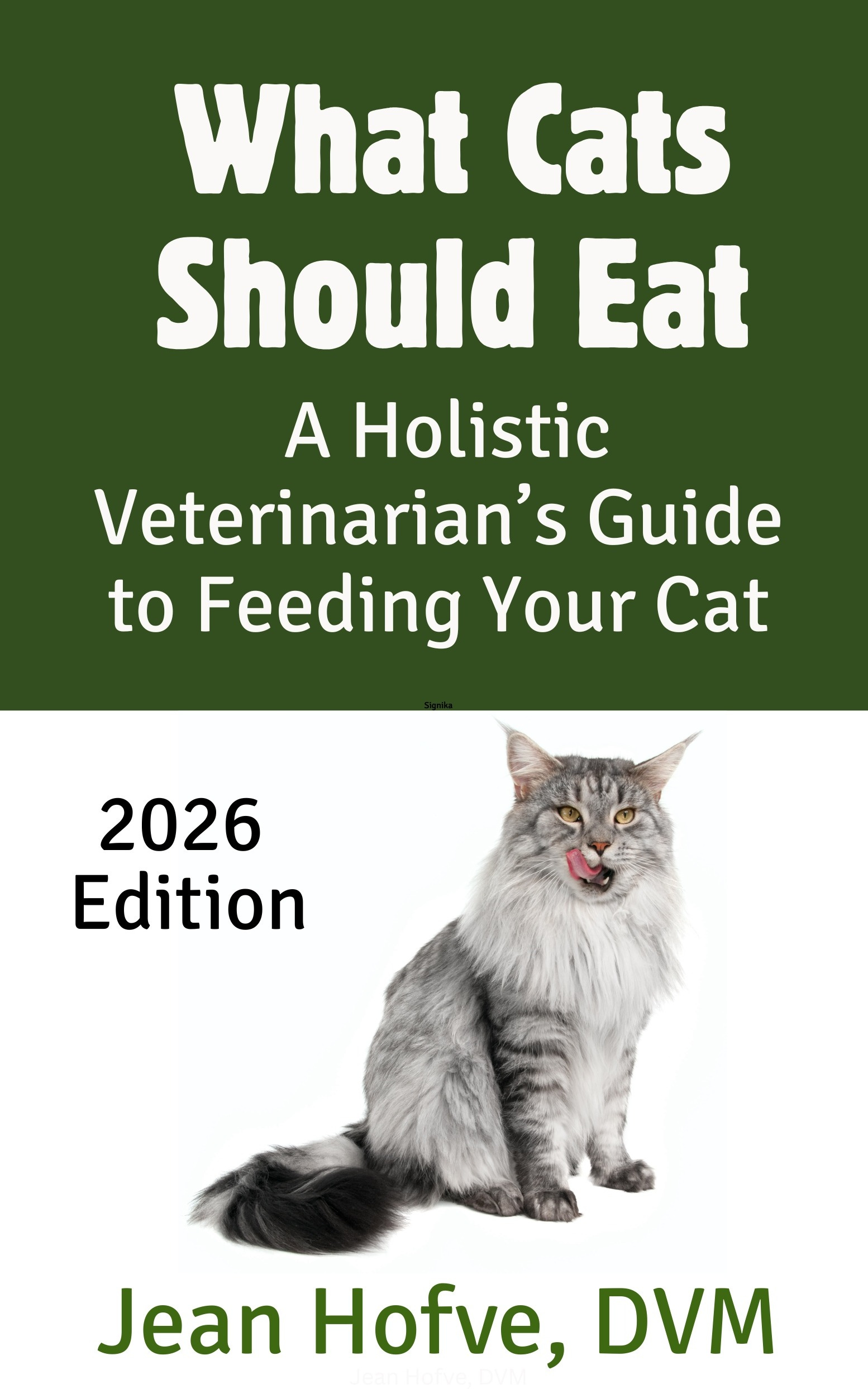
Long-time readers are probably familiar with my bestselling ebook, What Cats Should Eat: A Holistic Veterinarian’s Guide to Feeding Your Cat. I first published it around 2012, and have updated it many times since then. I’ve been working on the most recent update for three years (every time I think it’s ready, things keep changing!). But I finally got it published! It’s completely restructured and updated (right up to a study I read last week!). Check it out on Amazon.com, or if you prefer to give your business to an independent seller, you can get it as a PDF here. It’s only $9.99, which I think is pretty reasonable for 200+ pages and more than 400 scientific references! I back up what I say with hard data as well as 30+ years of veterinary experience. I hope it helps you give your cat the best, healthiest life possible! [Note: If you purchased a previous edition, the next time you open it Amazon should notify you that the update is available.]
Federal Resolution Against Cat Declawing Filed
A resolution introduced in the U.S. House of Representatives (H.R. 985) by New York Congressman Jerry Nadler and 17 co-sponsors opposes elective declawing in cats.
The resolution recognizes that scratching is a normal, healthy feline behavior and that declawing causes lasting harm. These surgeries are linked to chronic pain, lameness, litter box problems, increased biting, and long-term behavior changes. Declawing does not reduce shelter surrender rates, despite claims to the contrary. In fact, declawed cats may pose greater public-health risks because they are more likely to bite. Humane alternatives are widely available.
The resolution urges veterinarians to strongly discourage elective declawing and calls on remaining states to ban the practice, allowing it only when medically necessary for the cat’s health—not for convenience or property protection.
The resolution was referred to the House Agriculture Committee. It has not been discussed and no action is pending. The U.S. government cannot regulate declawing; it is a state issue. A resolution has no force of law. However, getting declawing discussed at the federal level, even without action, is wonderful because it:
enters the official congressional record
reinforces that this is a public health and animal welfare issue
provides animal advocates more support for local and state declaw bans
raises public awareness of the harm caused by declawing
Please let your congressional representatives know that you support humane treatment of animals, and urge them to vote yes on H.R. 985. Click here to contact them.
Not All Cats Are Huggers
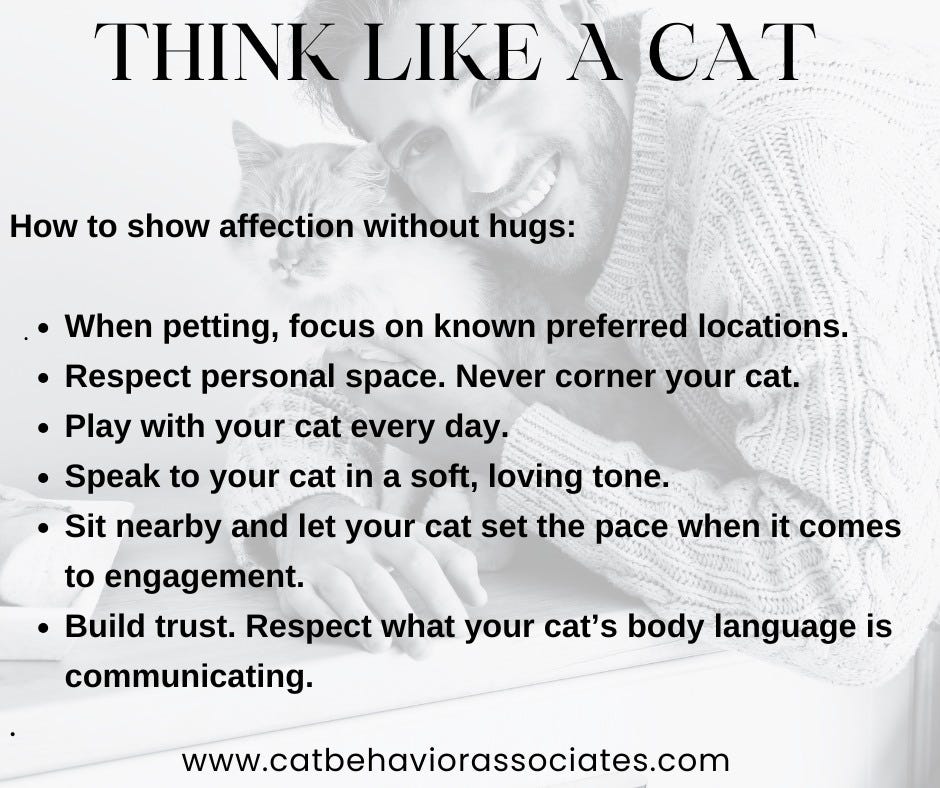
My friend and colleague, Pam Johnson-Bennett, recently posted about respecting cats’ physical boundaries. While many cats enjoy a close cuddle session, some cats feel uncomfortable, or even threatened, by too much hugging. She created this great graphic to remind us all how to safely and comfortably interact with cats and maintain a great relationship with them.
Fat Facts
Since I travel a lot by car, I am always listening to things… audiobooks, podcasts, YouTube… One of my favorites is Dr. Ben Bikman, the metabolic scientist, author, and professor at Brigham Young University known for his research on insulin resistance (which leads to type 2 diabetes—the kind cats get). Because of cats’ close tie-in to human metabolic issues, his work is especially interesting to me.
I’ve been trying to comprehend the ins and outs of fat metabolism, and I asked my pal ChatGPT to synthesize the concepts from Dr. Bikman and other scientists so my little brain could absorb them. The answers were so profound—and upsetting—that I sat down and cried thinking how cats have been done so wrong by the pet food industry. I had to do something, right now! So I decided to write about it.
Seriously, these ideas sent me down a rabbit hole I didn’t expect. Like most of us, I’ve long understood the role carbohydrates play in feline obesity and diabetes, and I’ve talked about that for years. But digging deeper into fat metabolism revealed another layer of the story. Fat isn’t just fuel. Some fats become part of the very structure of cells, including the membranes where insulin delivers its message. When those structures are altered, insulin signaling can falter quietly and gradually, setting the stage for weight gain, metabolic disease, and eventually diabetes.
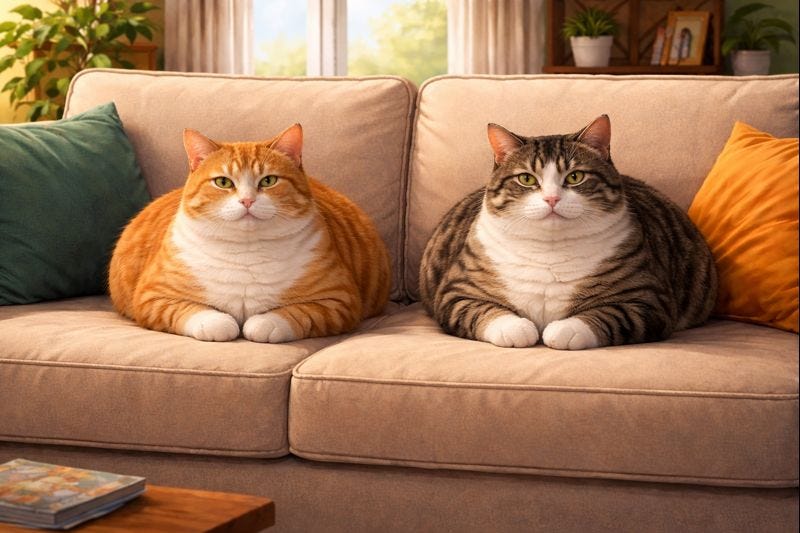
This doesn’t mean carbs are off the hook, oh no no. Keeping insulin demand low through a low-carbohydrate, species-appropriate diet is still the biggest key. But fat quality deserves more attention than it usually gets, particularly in highly processed pet foods. We know that raw or less processed diets are more digestible and healthier for our cats. But more appropriate fat sources are also a big deal. They can reduce metabolic stress and reduce the effects of insulin resistance. Moreover, I discovered that certain nutrients can offer additional support. Phospholipids such as lecithin (I prefer sunflower lecithin over soy to avoid GMOs) provide building blocks for membrane repair and liver function, while long-chain marine-sourced omega-3 fatty acids (EPA and DHA) help support balanced membrane composition and inflammatory signaling. These aren’t cures or shortcuts, but I’m hopeful that they can mitigate some of the everyday metabolic damage, especially when combined with thoughtful, long-term dietary choices.
Ask Dr. Jean
I’ll be leaving on my winter travels on Sunday, but as a benefit for paid subscribers, every month I answer your questions. If you have a cat question, post it here. (I just can’t legally give individual veterinary advice). Click here to find out how to take advantage of this opportunity. Then just post your questions in the comments. I’ll take questions until 4 pm February 8, 2026.
Thrilled to read the updated book!! Thank you!